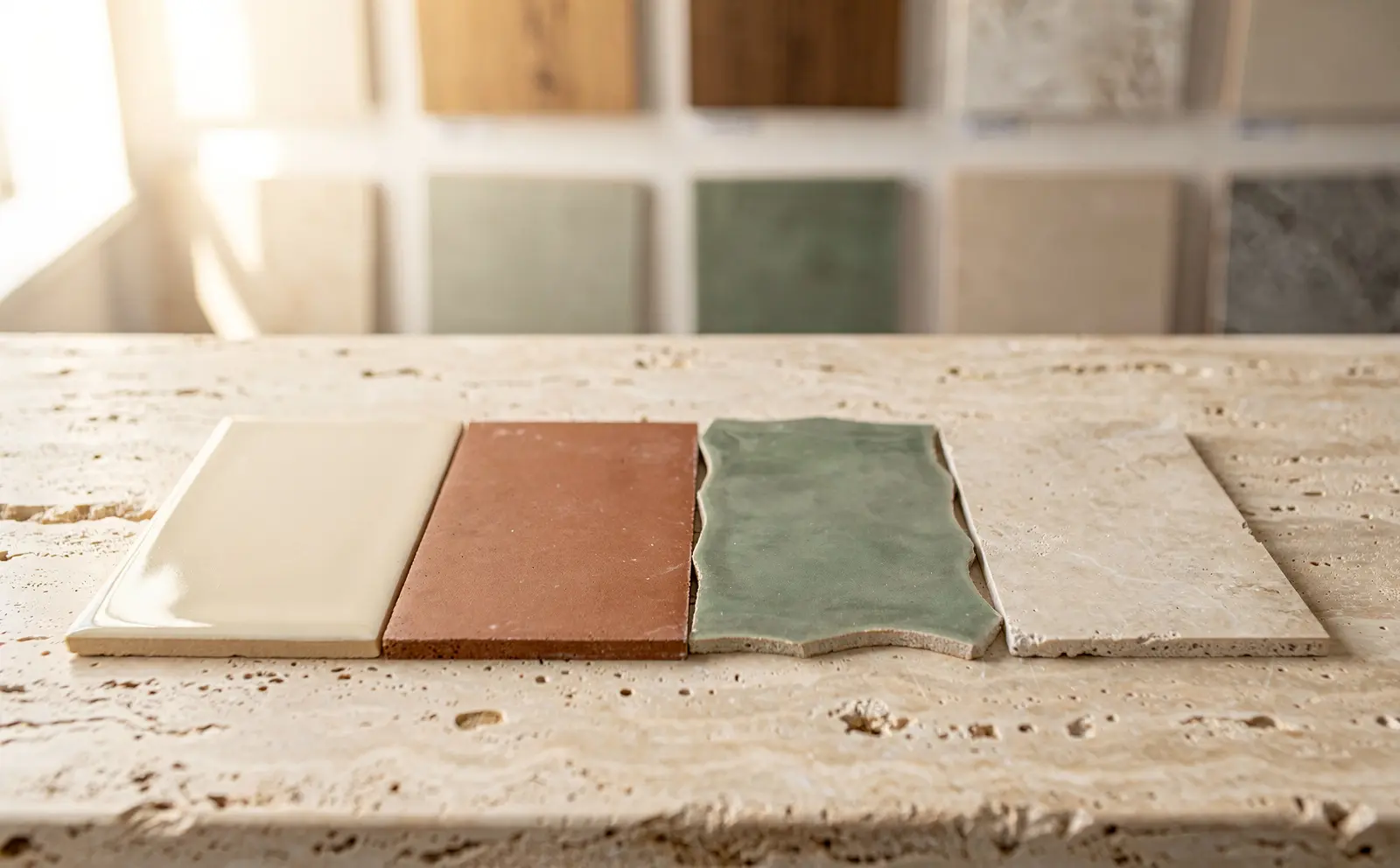
For most tile and stone businesses, the sample request is where a sale really starts. Someone who asks for three tiles has a room in mind, a rough budget and a project that is moving. Yet many showrooms treat samples as a cost line: post them out, hope for the best, and move on.
This guide looks at sample requests as what they are, a qualified lead, and walks through how to capture them, follow them up and turn more of them into orders, both online and in the showroom.
Why sample requests deserve more attention
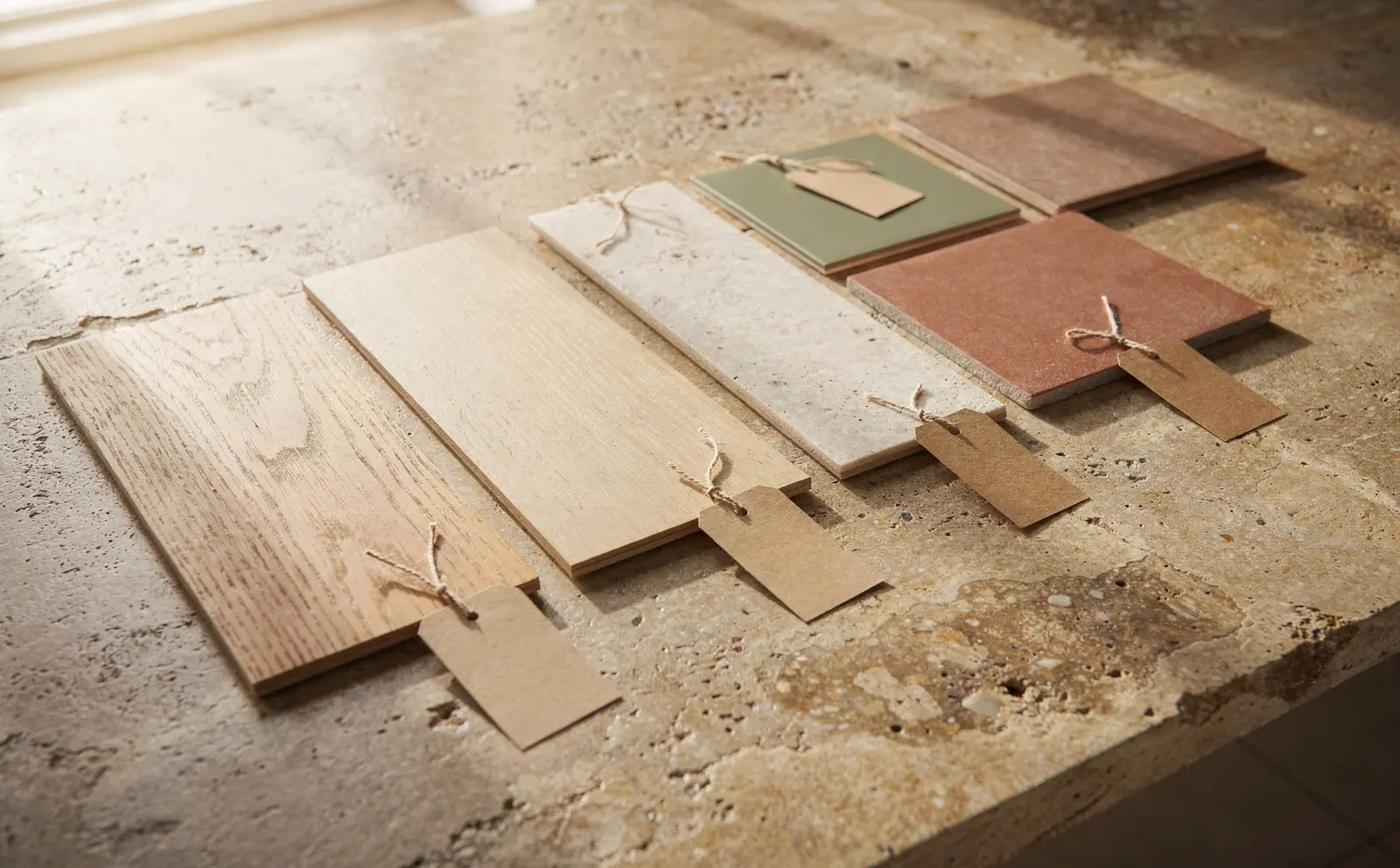
A tile sample answers questions no photo can: the weight of the tile, the depth of the glaze, how a handmade edge catches the light, how a colour sits next to a worktop. When a shopper asks for samples, they are telling you:
- which products they are considering
- roughly which style and colour family they prefer
- that they are close enough to a decision to wait for a parcel
That is more than most leads tell you. The problem is usually not the number of sample requests, it is what happens after they are sent.
Capture the request properly
Ask a little, not a lot
The sample form or checkout is the moment to learn a few useful things. Keep it short, and make the extra questions optional:
- Which room is it for? Bathroom, kitchen splashback, floor, outdoor.
- Roughly how many square metres? Even a range helps.
- When are you hoping to start? This month, in the next three months, later.
- Are you working with a fitter or designer? Trade and retail customers need different follow-up.
Four questions is plenty. Every extra field costs you some requests.
Record what was requested, with the context
Make sure each sample request is stored with the products, the answers above and the source (product page, showroom visit, social post, ad). If samples are requested in the showroom, log them the same way. A sample request sitting in a parcel label printer and nowhere else cannot be followed up.
Set expectations clearly
On the page and in the confirmation email, say what the shopper will receive, how big the samples are, when they will arrive and whether there is a charge. If a sample is a cut piece rather than a full tile, say so, especially for patterned or handmade tiles where one piece shows only part of the variation.
Make the samples themselves do more work
The parcel is a marketing piece. Small touches help the shopper judge the tile properly and remember who sent it:
- A label on each sample with the product name, size, finish and a short code they can quote.
- A card on how to judge tile samples: look at them in the room, in daylight and in the evening, next to the worktop or the floor that is staying, and with a grout colour in mind.
- Grout guidance: a small strip showing a few grout colours, or a link to photos of the tile with light and dark grout.
- A simple next step: a link to request a quote, book a showroom visit or speak to someone.
If you supply handmade or natural products, include a note on variation. Shoppers who expect perfectly uniform tiles and receive zellige or tumbled stone are better prepared if you tell them before the full order arrives.
Follow up at the moments that matter
A simple sequence that respects the shopper
A good follow-up sequence is short, useful and tied to what the shopper actually asked for. A reasonable pattern looks like this:
- When the samples ship: confirmation, delivery date and the "how to judge samples" guidance.
- A couple of days after delivery: "Did the samples arrive safely?" with answers to the common questions for the specific tiles: suitability for floors or showers, slip rating, sealing, lead times.
- About a week after delivery: an offer to help with quantities and a quote, with the sampled products already listed.
- Two to three weeks later, if there is no reply: a short check-in, and perhaps photos of the same tiles in finished rooms.
Stop the sequence as soon as the shopper replies, orders or asks you to. Nothing damages trust faster than automated emails that ignore a phone call that already happened.
Use what the shopper told you
The answers from the sample form make follow-up much more relevant. A shopper tiling a shower needs to hear about slip resistance and waterproofing. Someone planning a kitchen splashback cares about cleaning and how the tile works with the worktop. Someone starting in six months does not need a "limited stock" message this week.
Route the right requests to a person
Some sample requests deserve a phone call rather than an email: large areas, trade customers, or shoppers who sampled premium ranges. Agree a simple rule with your team, for example any request above a certain area is called within two working days, so the follow-up is consistent.
Help shoppers see the tile at scale
One of the most common reasons a sample does not become an order is that the shopper cannot picture a whole wall or floor from a single tile. Patterns, grout lines and colour variation only become clear at scale. A few ways to help:
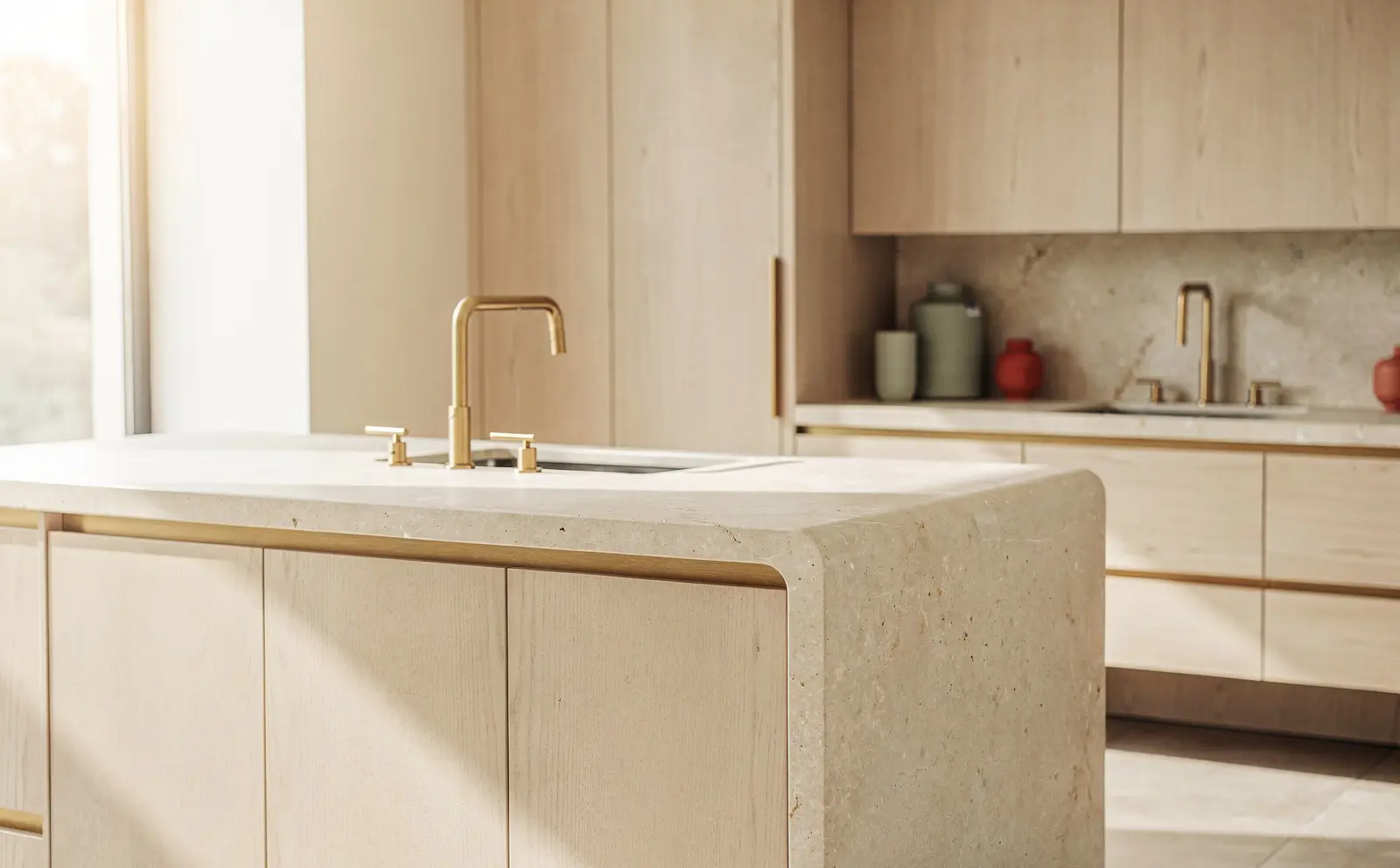
- Photos of each tile across a full wall or floor, ideally in more than one room type.
- Layout examples for tiles that can be laid in several patterns, such as herringbone, stack bond or brick bond.
- A tile visualizer that lets the shopper see the tile in a photo of their own bathroom or kitchen. A tile visualizer on the product page, and in the follow-up email, gives shoppers a way to compare their sampled tiles side by side on their own walls.
- Showroom displays that use real wall areas, not just boards, for your best-selling ranges.
Bring online and showroom together
Many tile shoppers move between channels. They request samples online, visit the showroom on a Saturday, and then order by phone. Make sure your team can see the online sample history when a customer walks in, and that showroom visits are logged so online follow-up does not repeat what was already discussed.
Useful habits:
- Ask in-store visitors whether they have ordered samples before, and look them up.
- Offer to send samples home from the showroom so they can be judged in the actual room.
- After a visit, send a short summary of what was discussed with links to the products.
Measure the path from sample to order
Track a few numbers consistently, month by month:
- sample requests by product and by source
- the share of requests that become a quote, and the share of quotes that become an order
- the typical time from sample to order
- products that are sampled often but rarely ordered
The last one is especially useful. A tile that is sampled a lot but rarely ordered may have a photography problem (it looks different in person), a price problem, or a lead time problem. Each needs a different fix.
Where Ardealy fits
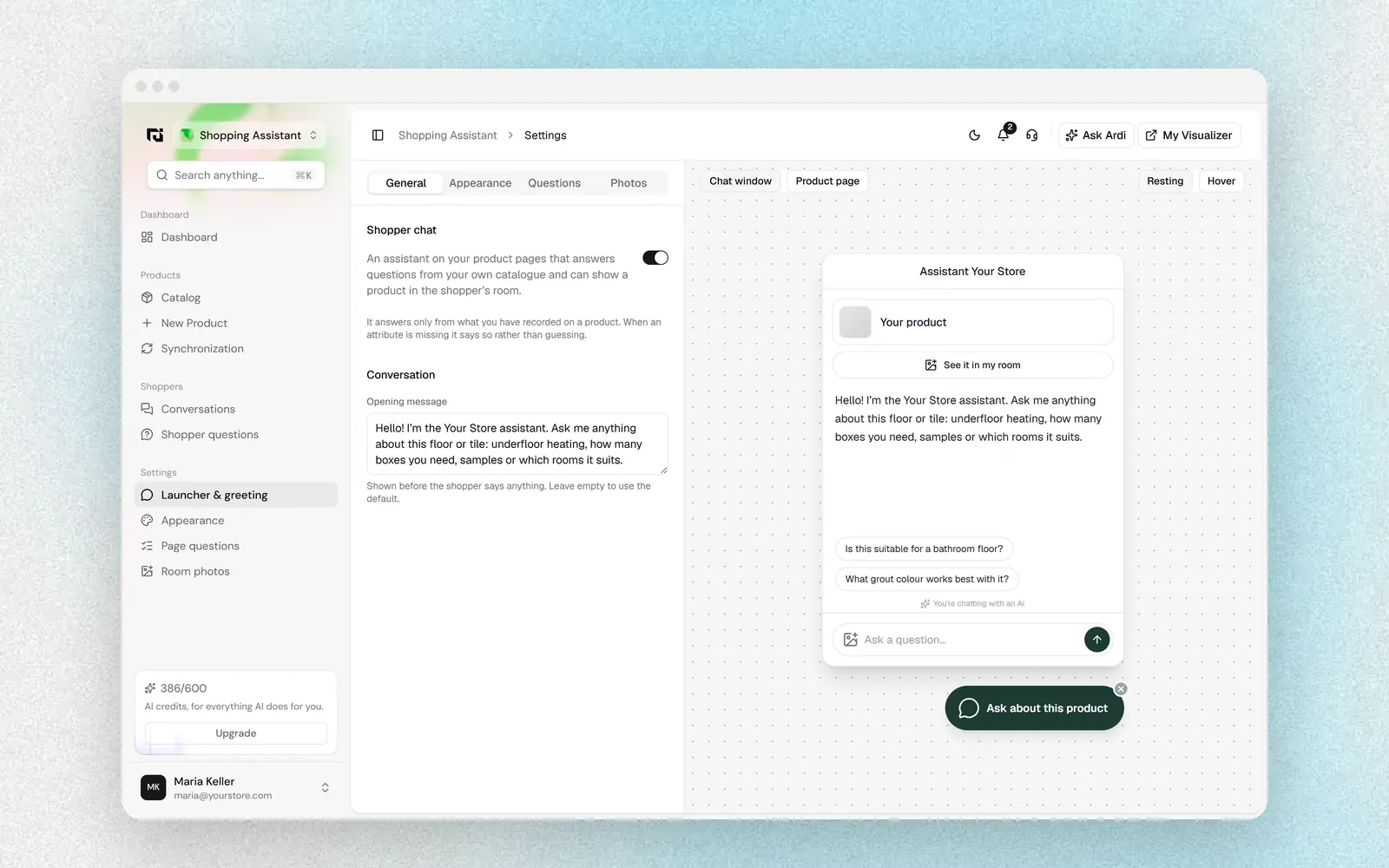
Ardealy gives tile and stone businesses the tile visualizer for product pages, a shopping assistant that answers tile questions from your catalogue, and follow-up email for sample and quote requests that you approve before anything is sent. If you want to see how this applies to your range, the tile and stone page explains the setup, or you can book a demo. The approach in this guide works with any tools you already use.
FAQ
Should we charge for tile samples?
Many businesses offer a few free cut samples and charge for full tiles, refunding the charge against an order. Whatever you choose, state it clearly on the product page and at checkout.
How many follow-up emails is too many?
Three or four over about a month is usually enough, and they should stop as soon as the shopper replies or orders. Each one should answer a real question rather than repeat the offer.
What should go in the sample parcel?
Clearly labelled samples, guidance on judging them in the room and with grout, a note on natural variation where relevant, and one simple next step such as a quote request.
How do we follow up showroom sample requests?
Log them in the same place as online requests, with the products and project details, and follow up the same way. A short summary email after the visit is a good first step.
Which sample requests should get a phone call?
Large areas, trade customers and requests for premium ranges are usually worth a call. Agree a simple rule with your team so it happens consistently.