A new kitchen or bathroom is a local purchase, even when the research happens online. Shoppers want to see the materials, talk to a designer, and know that someone nearby will measure, fit and answer the phone if something goes wrong. That is why so many projects start with a search such as "kitchen showroom near me" or "bathroom fitters in" followed by a town name.
Local SEO is how a showroom makes sure it appears in those searches, and gives people a reason to visit. This guide sets out a practical plan for kitchen and bathroom showrooms, starting with the basics and working up.
How local search works for showrooms
When someone searches with local intent, search engines usually show a map with a few businesses, followed by regular results. Which businesses appear depends broadly on three things that the search engines themselves describe:
- Relevance: how well your business matches what was searched.
- Distance: how close you are to the searcher or the place named.
- Prominence: how well known and well regarded your business is, online and off.
You cannot change your distance from a searcher, but you can do a lot about relevance and prominence.
Start with your Google Business Profile
For most showrooms, the business profile is the single most important local search asset. Treat it like a shop window.
Get the basics exactly right
- Business name as it appears on your sign, without added keywords.
- Address and phone number, identical to your website and other listings.
- Opening hours, including holiday hours and appointment-only times.
- Primary category that matches what you are, such as kitchen showroom or bathroom supply store, with relevant secondary categories.
- Website link to the most relevant page, usually your showroom page rather than the home page.
Fill in everything that helps a shopper decide
- Services: design, measuring, supply only, supply and fit, project management.
- Products: your main ranges, with photos and short descriptions.
- Attributes: accessibility, parking, appointments.
- Description: a plain summary of what you do, the area you cover and what makes a visit worthwhile.
Add photos regularly
Upload real photos of your showroom displays, your team, and finished projects (with the client's permission). Fresh, genuine photos make a profile more useful and more trustworthy. Avoid stock images.
Use posts and questions
Short updates about new displays, events or ranges keep the profile active. If shoppers ask questions on your profile, answer them promptly, and consider adding common questions and answers yourself.
Build a showroom page on your website
Your website needs a page for each showroom location, with:
- the full address, phone number and opening hours, matching your business profile
- an embedded map and directions, including parking and public transport
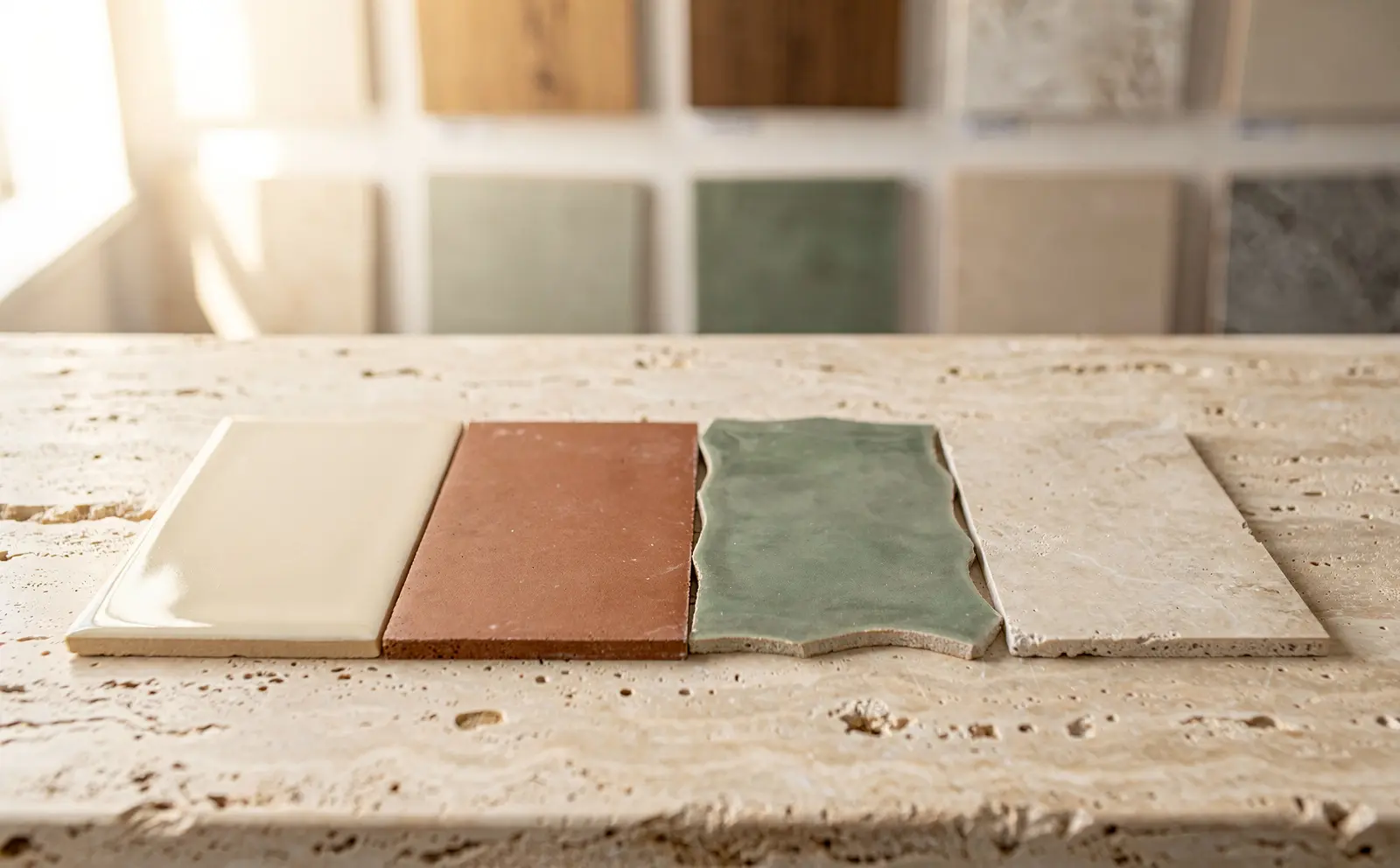
- what can be seen at the showroom: which kitchens, bathrooms, worktops and tile ranges are on display
- photos of the showroom itself
- how to book a design appointment
- the area you cover for measuring and fitting
If you have more than one showroom, give each its own page with genuinely different content: its own displays, team and local projects. Avoid near-identical pages with only the town name changed.
Add local business structured data
Structured data helps search engines understand your business details. Add local business markup with your name, address, phone, opening hours and geo-coordinates, consistent with your profile. Your web developer or platform can usually handle this.
Keep your details consistent everywhere
Your business name, address and phone number should be identical across your website, business profiles, social profiles, trade directories and supplier "where to buy" listings. Inconsistent details, such as an old phone number on a directory, confuse shoppers and can weaken your local presence. Review them once a year and after any move or number change.
Supplier dealer locators are worth special attention. Many shoppers find showrooms through the brand they have chosen, so make sure manufacturers list you correctly with a link to your site.
Earn and answer reviews
Reviews influence both whether you appear and whether people choose you.
Ask at the right moment
The best time to ask for a review is shortly after a happy moment: the kitchen is finished, the bathroom is in use, the client has said thank you. Make it easy with a direct link, sent by email or text. Ask every client, not only the ones you expect to be happy, and do not offer incentives for reviews, which breaks the platforms' rules.
Reply to every review
Thank people for positive reviews with a specific, personal reply. For negative reviews, reply calmly, acknowledge the problem, and offer to resolve it offline. Future clients read these replies to judge how you handle problems, which matters a great deal for projects that take weeks.
Create content around local projects
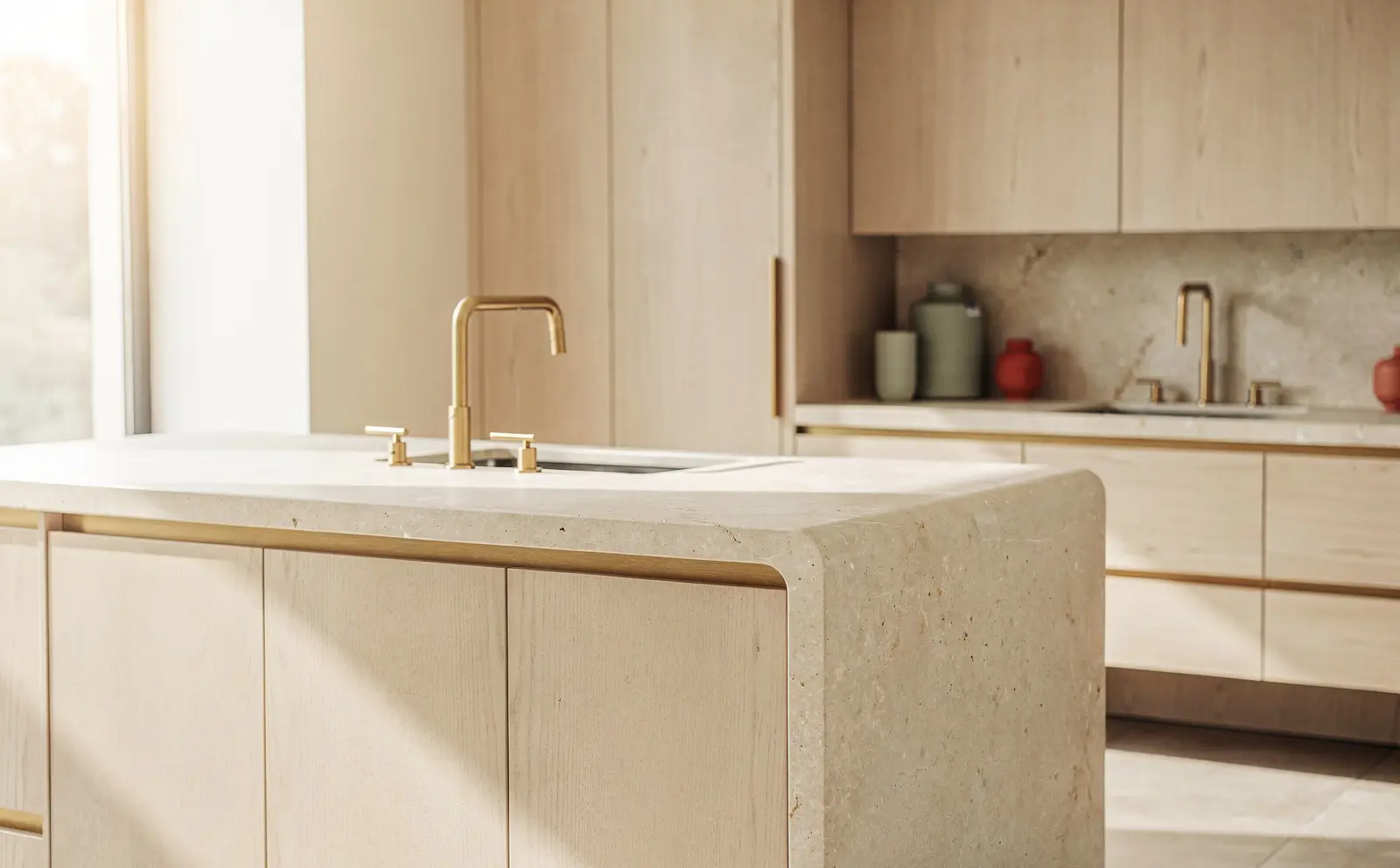
Kitchen and bathroom shoppers love to see real work. Project pages are among the most useful content a showroom can publish, and they naturally contain local signals.
What a good project page includes
- the town or area, if the client is happy to share it
- the brief: what the client wanted and any constraints
- the products used: cabinet range, worktop, tile, taps, flooring
- before and after photos
- a short note on how long it took and any interesting challenges
Link project pages to the relevant product and showroom pages. Over time, they build a library that shows the quality and range of your work.
Answer local questions
Write helpful guides that reflect what clients ask you: how long a kitchen project usually takes from design to fitting, what to consider when replacing a bathroom in an older house, how to choose a worktop for a busy family kitchen. Plain, specific answers are more useful than generic advice.
Make the website work on phones
Many local searches happen on phones, often while people are out. Make sure:
- the phone number is tap-to-call
- directions and opening hours are easy to find
- pages load quickly and images are compressed
- booking forms are short and work well on small screens
Help online visitors picture the result
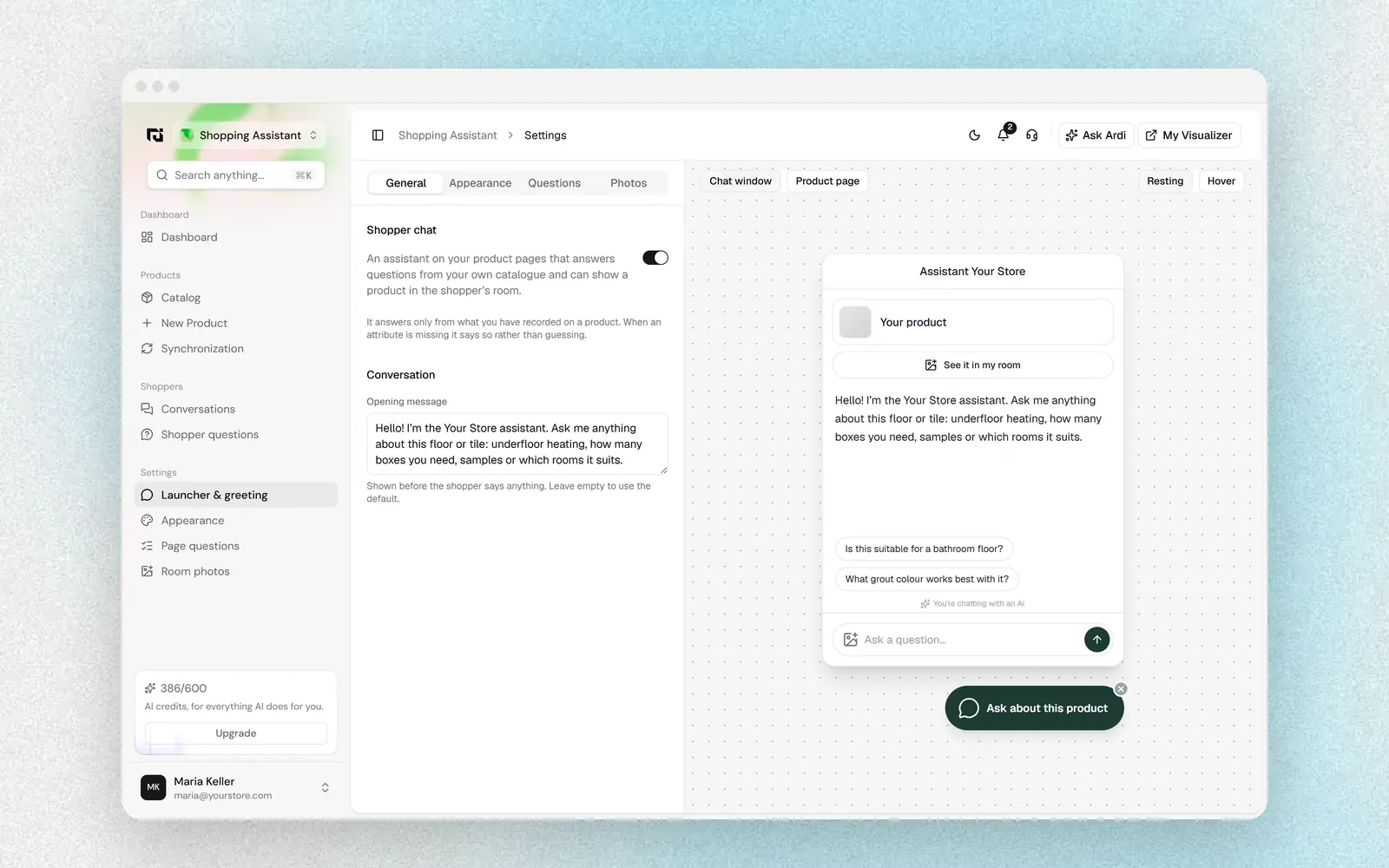
People researching a kitchen or bathroom online often want to try ideas before visiting. A visualizer on your product pages, where shoppers can see your worktops, tile or cabinets in a photo of their own kitchen, gives them a reason to engage and a clearer idea of what to ask about when they book a visit. The visualizer page explains how this works.
Measure what local SEO brings
Track a few things monthly:
- business profile views, calls, direction requests and website clicks
- searches you appear for, and where you rank for your key local terms
- design appointment bookings from the website, by source
- reviews received and your average rating
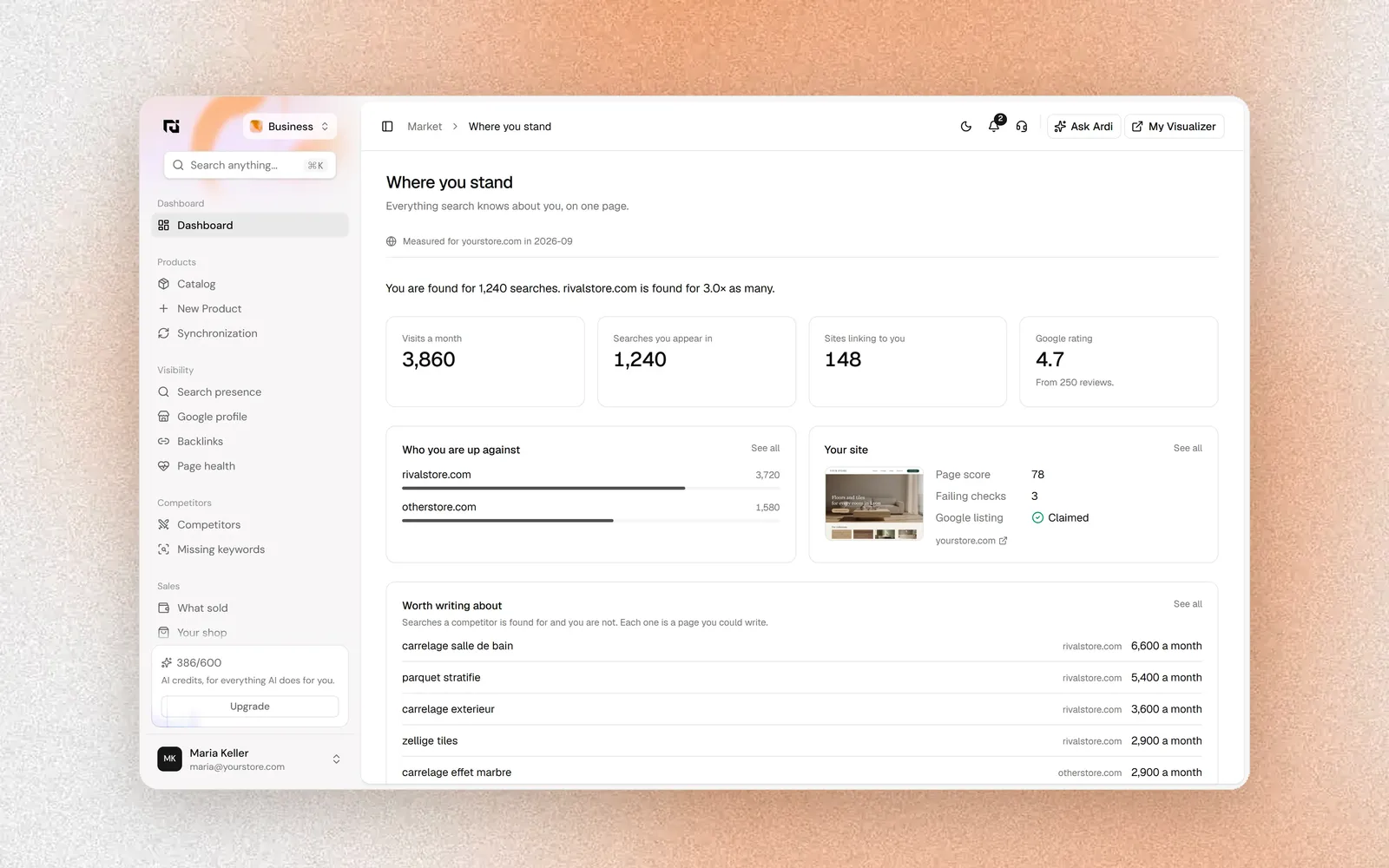
Search presence tools, such as Ardealy's business analysis, can also show how your visibility compares with nearby competitors and which searches you are missing.
Where Ardealy fits
Ardealy reads your search presence, page health and competitors daily, suggests missing keywords and content, and gives kitchen and bathroom showrooms a visualizer and shopping assistant for their product pages. Everything it proposes waits for your approval. The kitchen and bath page has more detail.
FAQ
How long does local SEO take to show results?
It varies by area and competition. Fixing your business profile and details can help relatively quickly, while reviews and content build up over months.
Should we put keywords in our business name on the profile?
No. Use your real business name as it appears on your sign. Adding keywords goes against the platform guidelines and can cause problems.
Do we need a separate page for each showroom?
Yes, each location should have its own page with genuinely distinct content, consistent with that location's business profile.
How should we ask clients for reviews?
Shortly after the project is finished, with a direct link and a personal note. Ask all clients and do not offer incentives.
Are project case studies worth the effort?
Yes. Real projects with photos and product details are among the most useful content for kitchen and bathroom shoppers, and they support local relevance.