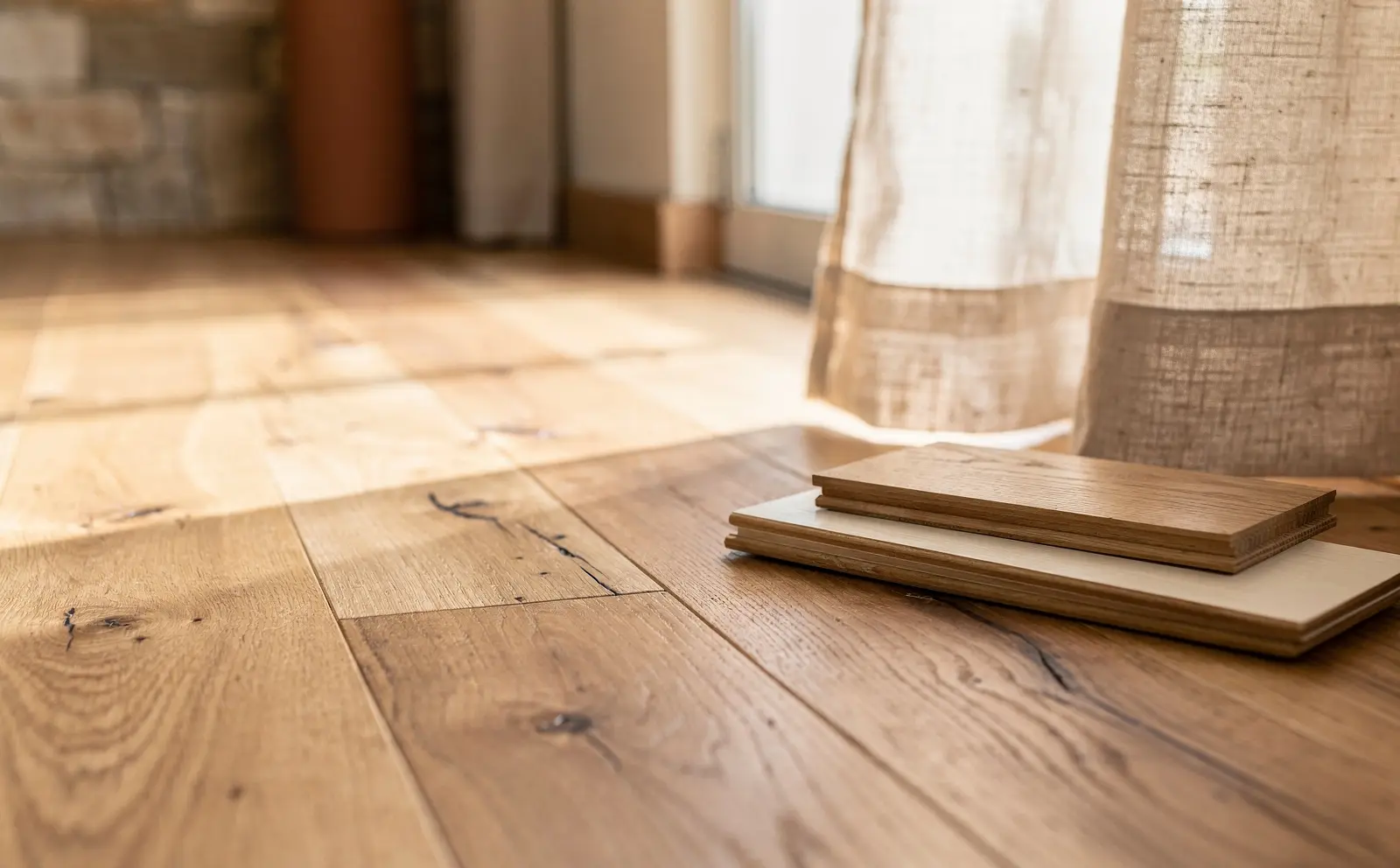
Flooring is one of the hardest things to sell online. It covers the largest surface in a room, it is expensive to fit, and it is difficult to undo. In a showroom, a shopper picks up a plank, runs a thumb along the bevel, holds it next to a cabinet door and asks a staff member whether it will scratch. Online, all of that has to happen on a product page.
The good news is that most of what a shopper gets from touching a floor can be replaced, or at least approached, with clear information, honest imagery and an easy path to a physical sample. This guide walks through what that looks like in practice.
Why flooring is harder to sell online than most products
Before fixing the product page, it helps to name what the shopper is actually worried about. Flooring hesitation usually comes down to five questions:
- Will it look right in my room? Colour and grain look different under north light, in a small hallway, or next to an existing kitchen.
- What does it feel like? Texture, matte or lacquered finish, the depth of the bevel, how warm it is underfoot.
- Will it last in my home? Pets, children, kitchens, underfloor heating, moisture.
- How much do I actually need, and what will it cost in total? Boxes, wastage, underlay, trims, fitting.
- What happens if I get it wrong? Returns on opened boxes, restocking fees, delivery charges.
Every part of your online experience should answer one or more of these. If a page does not, the shopper goes back to searching, or leaves to visit a store.
Make the product page do the showroom's job
Show the floor at the right scale
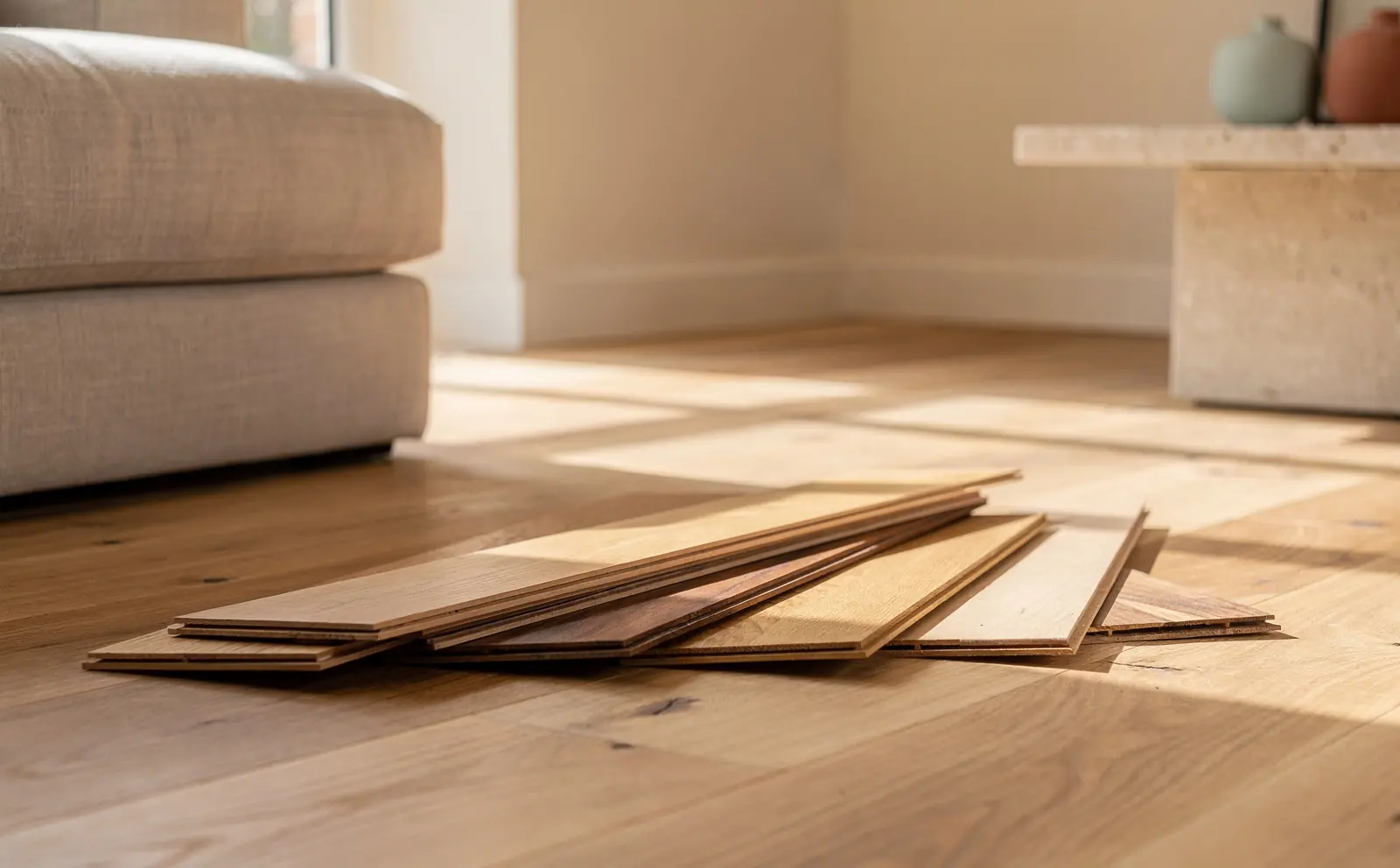
A single tight photo of one plank is not enough. Shoppers need to see how a floor reads across a whole room, where the pattern repeats and how much variation there is between boards. A good flooring gallery usually includes:
- A wide room shot where the floor is the hero, not the sofa.
- A mid-distance shot showing a few square metres, so the shopper can judge plank width and variation.
- A close-up of the surface and the edge profile, ideally with raking light to show texture.
- A shot of the plank side-on, showing thickness, wear layer and click system.
- The floor in at least two different light conditions, for example warm afternoon light and cooler daylight.
If you sell many colours of the same range, keep the camera angles consistent across colours. That way, shoppers comparing two shades are comparing the floor, not the photography.
Let shoppers see it in their own room
Even excellent room shots show someone else's room. The step that removes the most uncertainty is letting the shopper see the floor in a photo of their own space. A flooring visualizer on the product page does this: the shopper uploads a photo, the existing floor is detected, and your product is laid in with the right perspective.
It does not replace a sample, and you should not pretend it does. What it does well is narrow the choice. A shopper who has seen three floors in their living room usually orders samples of one or two, not eight.
Write specifications people can use
Specification tables are often copied straight from the manufacturer and assume trade knowledge. Translate them. For each key spec, add a short line on what it means in practice:
- Wear layer or AC rating: say which rooms and households it suits.
- Finish: describe how it looks and how it is maintained, not only its name.
- Dimensions and pack size: state the coverage per box in square metres, not only plank sizes.
- Underfloor heating and moisture: say plainly whether it is suitable for kitchens, bathrooms and heated floors.
- Installation: click, glue down or nail, and whether a confident DIYer can fit it.
Put the total cost on the page
A price per square metre is a good start, but shoppers want to know what the whole job costs. Add a simple coverage calculator that adds a wastage allowance and rounds up to full boxes. Then list the usual extras alongside: underlay, trims, adhesive, fitting if you offer it. Showing the full picture early prevents the unpleasant surprise at checkout that leads to abandoned baskets.
Treat samples as part of the sale, not a cost
Make ordering samples easy
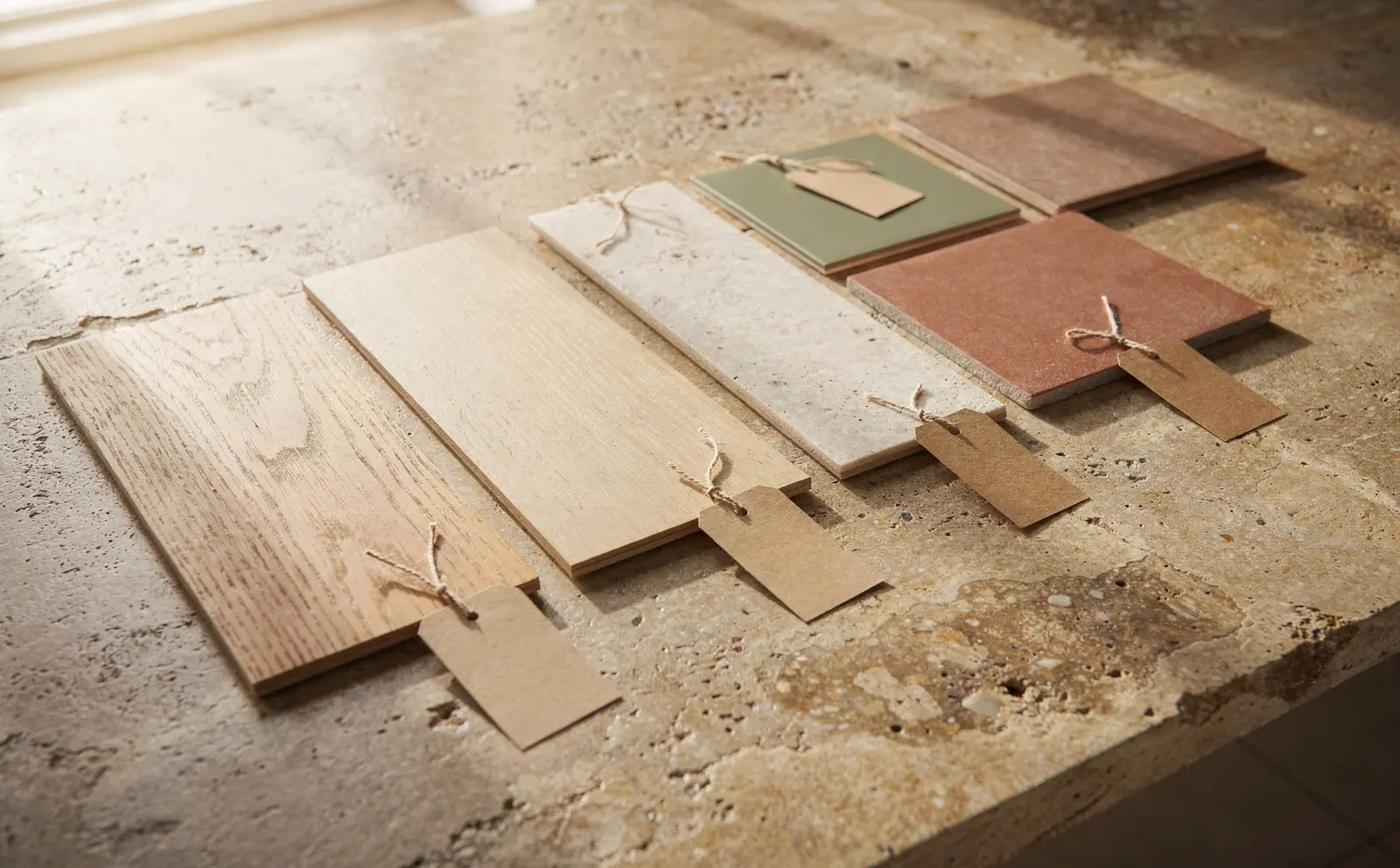
For most flooring retailers, the sample is the real first conversion. Make it obvious on every product page, with a clear button near the price, and let shoppers add several samples in one order. Be clear on whether samples are free, how large they are and how quickly they arrive.
Larger samples help. A small chip can make a floor with a lot of character look plain, or a calm floor look busy. If you can offer a larger cut or a sample board on request, say so.
Capture the sample order properly
A sample order is a lead with clear intent. Record which products were requested, and ask one or two optional questions at checkout: which room is it for, and roughly when are they planning the work. Keep it short. Those two answers let you send far more useful follow-up than a generic newsletter.
Follow up while the samples are on the floor
The days after samples arrive are when decisions are made. A good follow-up sequence might look like this:
- On delivery: a short note on how to judge a sample. Look at it on the floor, not on a table. Check it in morning and evening light. Put it next to skirting, doors and cabinets.
- A few days later: answers to the common questions for the products they chose, such as underlay, fitting time and lead times.
- About a week later: a simple quote request or basket link with the products they sampled, and an offer to talk to someone.
Keep the tone helpful. The goal is to answer questions, not to push.
Answer questions before they are asked
Most flooring shoppers have the same questions, and they ask them repeatedly by phone, email and chat. Collect them. Your staff already know the top twenty. Put clear answers on product pages and in a short FAQ for each range.
You can go a step further with an on-page assistant that answers from your own catalogue: dimensions, suitability, stock, lead times and accessories. Ardealy's shopping assistant works this way, and the principle applies whatever tool you use. Answers should come from your data, not from guesses, and any question the assistant cannot answer should go to a person.
Make the next step obvious
Different shoppers are at different stages, so offer more than one next step:
- Order samples for people still choosing.
- Request a quote or measure for people who are ready and want certainty on cost.
- Buy now for confident shoppers who know their quantities.
- Book a showroom visit or a call for people who still want to touch the floor.
Each of these should be easy to find without scrolling past the reviews.
Reduce the fear of getting it wrong
Clear policies reduce hesitation more than discounts do. State plainly:
- whether unopened boxes can be returned, and within what period
- whether there is a restocking fee
- what happens if the floor arrives damaged
- how to order extra boxes later, and whether batch matching is possible
If you offer fitting, explain what is included and who does it. If you do not, point shoppers to how they can find a fitter, or what a fitter will need from them.
Measure what matters
Track the full path, not just the last click. Useful numbers to watch over time include:
- sample orders per product page view
- the share of sample orders that become a full order, and how long it takes
- which products are sampled often but rarely bought (a sign of a page or price problem)
- returns by product and the reasons given
These show you where the online experience is falling short far more clearly than overall traffic does.
Where Ardealy fits
Ardealy brings several of these pieces into one workspace for flooring retailers: the visualizer on your product pages, a shopping assistant that answers from your catalogue, follow-up email for sample and quote leads, and reporting on what actually sells. Nothing is sent or published without your approval. You can read more on the flooring page, but the principles in this guide work with any setup.
FAQ
Can a visualizer replace physical flooring samples?
No. A visualizer helps shoppers narrow down which floors suit their room, so they order fewer, better-chosen samples. The sample is still the best way to judge texture and exact colour.
Should flooring samples be free?
That depends on your margins and volumes. Many retailers offer a few free samples and charge a small fee beyond that, or refund the fee against an order. What matters most is that the policy is clear on the page.
What is the most important page element for flooring?
A clear, honest gallery at room scale, followed by the total cost. Shoppers need to see the floor properly and understand what the job will cost before they commit time to samples.
How soon should we follow up after a sample order?
Send a short, helpful note when the samples arrive, then follow up over the next week or so with answers and a simple path to a quote. Avoid daily emails.
Is it worth adding room photos for every colour?
If you can, yes, at least one wide shot per colour taken from the same angle. Consistent photography makes comparison much easier, and AI room scenes can help where a photo shoot is not practical.